Onely SEO Services for Ecommerce: The 2025 Guide
by ESSO Co | Nov 6, 2025 | Blog |
onely seo services for ecommerce
Key Takeaways
- Most ecommerce websites receive no organic traffic, highlighting a critical challenge for online stores.
- Ranking #1 in traditional search results is no longer enough to guarantee visibility to customers.
- Ecommerce founders need to adapt their SEO strategies to the evolving ways customers search online.
- The current SEO landscape demands innovative approaches to stand out in saturated markets.
Onely SEO Services for Ecommerce: The 2025 Guide
Here’s a stat that should wake up every ecommerce founder: 96.55% of websites get zero organic traffic. But here’s what’s more alarming, even brands ranking #1 are becoming invisible where customers actually search today. Book a free AEO and SEO strategy call to ensure your brand is visible across every search touchpoint.
Onely SEO services for ecommerce focus on advanced technical SEO, tailored content for answer engines, and strategic link building to boost organic growth and visibility.
AI answer engines like ChatGPT (2.5 billion daily prompts), Perplexity, and Google’s AI Overviews are fundamentally reshaping how customers discover products. If your brand isn’t mentioned in these AI-powered answers, you don’t exist in the buyer’s mind. Traditional SEO agencies are still optimizing for yesterday’s search landscape while your competitors are capturing pipeline through answer engine optimization. Explore our blog for the latest ecommerce SEO strategies that address these new challenges.
This shift demands what I call Agentic SEO, human strategy paired with AI execution at scale. It’s not about ranking #1 anymore; it’s about being mentioned, cited, and recommended across every search touchpoint. Companies like Onely offer solid foundational work, but ambitious ecommerce brands need systems that move at AI speed while maintaining strategic precision. Learn more about our approach to ecommerce SEO services for ecommerce brands and how you can stay ahead of the curve.
What’s Changed in SEO (2025 Reality Check)
- AI Overviews appear in 13% of searches (doubled since January)
- Answer engines drive “shocking” business growth for prepared brands
- Traditional ranking metrics miss 40%+ of discovery happening in AI assistants
- Speed matters more than perfection, publish optimized content in minutes, not months
What Onely SEO Services for Ecommerce Includes (Through the Lens of ESSO Co’s Agentic Stack)
Onely delivers the fundamentals well: comprehensive audits, technical SEO fixes, mobile optimization, schema implementation, and product page optimization. Their approach follows the traditional agency model, strategize, execute, report, repeat. It works, but it moves at human speed in an AI-powered world.
ESSO Co’s “always-on” agentic content system operates differently. Our AI agents connect directly to your Shopify catalog, generating product-aligned blogs, FAQ pages, and optimized copy in under 10 minutes per keyword. While traditional agencies ship 4-6 articles monthly, our brands publish 10x faster with AI speed and human strategy behind every piece.
The difference shows in results. Our 7 & 8 figure brands under management, combining for over $250M in annual revenue, see optimized content live within hours, not weeks. When Google’s algorithm shifts or new product lines launch, agentic systems adapt immediately rather than waiting for the next campaign cycle. See our terms for more details on our agentic stack and service delivery.
| Service Component |
Onely Approach |
ESSO Co Agentic Stack |
Legacy Agency |
| Content Creation Speed |
2-4 weeks per article |
10 minutes per optimized piece |
4-6 weeks per campaign |
| Product Integration |
Manual catalog review |
Direct API connection |
Quarterly updates |
| Answer Engine Optimization |
Basic schema markup |
Full AEO/GEO strategy |
Not addressed |
| Technical Implementation |
Developer-dependent |
Automated deployment |
Manual handoffs |
Why Ecommerce SEO Means More Than “Basic” SEO, Key Differences and Practical Implications
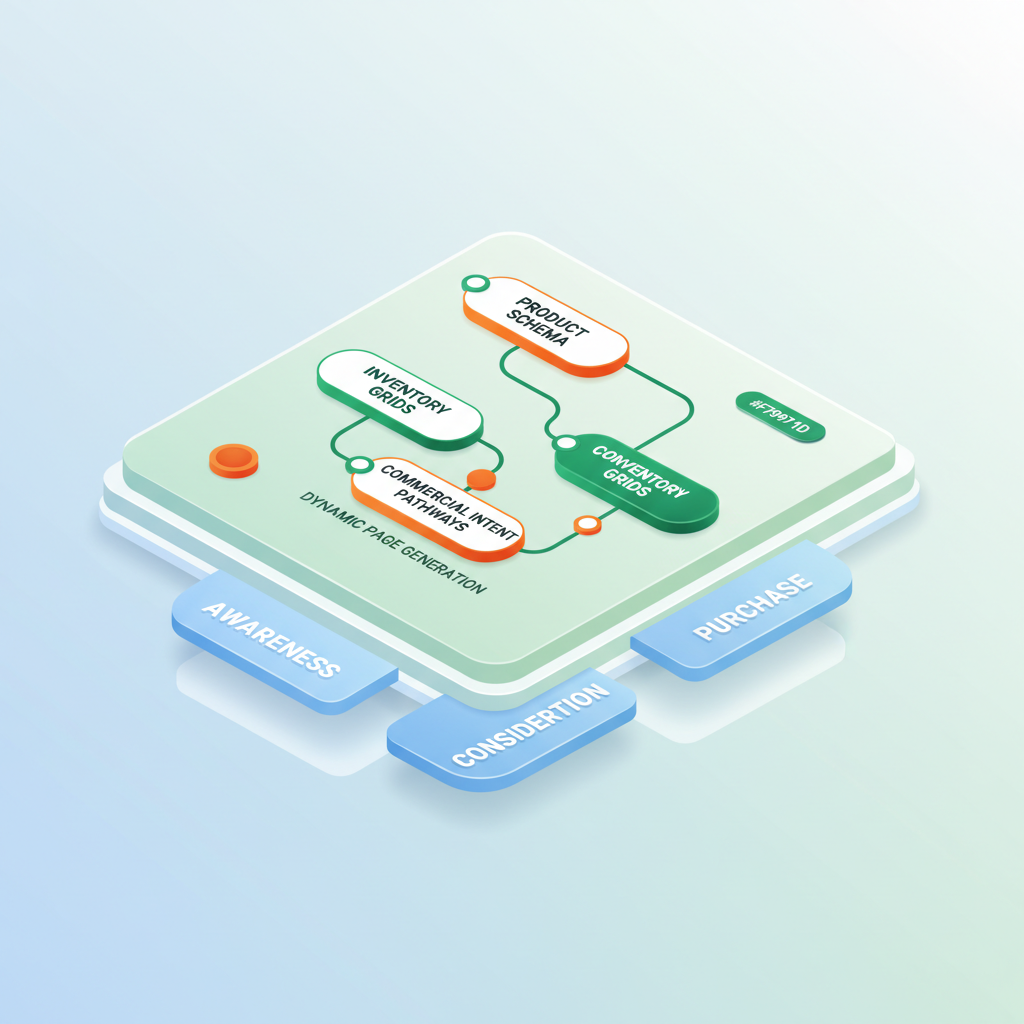
Ecommerce SEO isn’t website SEO with products sprinkled in. It’s a completely different discipline requiring product schema, inventory management, commercial intent optimization, and dynamic page generation. Your customers move through distinct funnel stages, awareness, consideration, purchase, and each demands different content strategies.
Product descriptions need 150-200+ words of unique content, never manufacturer copy. Category pages require semantic clustering around buyer intent, not just keyword stuffing. Review schema, breadcrumb markup, and FAQ structured data become critical for both Google rankings and answer engine citations.
The intent mapping changes everything. Informational content (“how to choose running shoes”) feeds top-funnel discovery. Commercial pages (“best running shoes 2025”) capture consideration. Transactional product pages convert ready buyers. Miss any layer, and you’re hemorrhaging potential customers to competitors who understand the full journey.
Minimum 2025 Requirements for Ecommerce Pages
- Product pages: Unique descriptions, review schema, image optimization for Google Lens
- Category pages: Semantic keyword clusters, filtering options, comparison tables
- Content hubs: FAQ schema, answer engine optimization, internal linking clusters
- Technical foundation: Core Web Vitals under 2.5s, mobile-first indexing, structured sitemaps
The Agentic SEO Framework, Accelerating Organic Growth for Ecommerce
Here’s the strategic framework that transforms scattered keywords into revenue-driving content clusters:
| Funnel Stage |
Content Type |
Intent Keywords |
Conversion Goal |
| Awareness |
Educational blogs, guides |
“How to,” “What is,” “Why” |
Email capture, brand recognition |
| Consideration |
Comparison pages, reviews |
“Best,” “vs,” “reviews” |
Product page visits |
| Purchase |
Product/category pages |
“Buy,” brand + product |
Add to cart, checkout |
I’ve seen Shopify brands increase organic revenue 300% by mapping their content architecture to actual buyer journeys rather than chasing high-volume vanity keywords. The magic happens when your FAQ pages answer consideration-stage questions while seamlessly linking to relevant product collections.
Agentic SEO means human strategy with AI execution at scale. Instead of waiting weeks for content briefs, revisions, and manual publishing, our AI agents connect directly to your Shopify catalog and generate product-aligned content that ranks for both Google and answer engines like ChatGPT.
Here’s how it works in practice: You set the strategic direction, target categories, seasonal priorities, competitive gaps. Our agentic system analyzes your catalog, identifies content opportunities, and ships optimized articles, FAQ pages, and product descriptions within hours. Each piece includes proper schema markup, internal linking clusters, and structured data designed for AI citation.
What Is Agentic SEO?
Human Strategy + AI Speed: Founders define growth objectives and brand voice. AI agents handle research, writing, optimization, and publishing at machine speed with human-level quality control.
The results speak for themselves. One Shopify store using our 100-Day Traffic Sprint went from 8,000 to 60,000 organic sessions in under 90 days. The difference wasn’t just content volume, it was strategic content deployed faster than competitors could respond. When you can publish 50 optimized articles in the time traditional agencies produce 5, you own more search real estate and capture more buyer intent.
This approach becomes especially powerful for seasonal businesses or brands launching new product lines. Instead of missing peak seasons while waiting for content campaigns, agentic systems adapt in real-time to inventory changes, trending keywords, and market opportunities. Read our privacy policy to learn how we handle your data during rapid content deployment.
Technical SEO for Ecommerce, From Core Web Vitals to Schema Mastery
Technical SEO for ecommerce starts with speed. Your Largest Contentful Paint (LCP) must hit under 2.5 seconds, or you’re losing both rankings and revenue. Product images need WebP optimization, lazy loading, and descriptive alt text for Google Lens searches, which grew 85% year-over-year.
Schema markup separates winners from also-rans. Product schema, Review schema, BreadcrumbList, FAQ, and Article structured data don’t just help Google understand your pages, they make your content citable by AI answer engines. When ChatGPT recommends products, it pulls from properly structured data. For a comprehensive overview of ecommerce SEO best practices, see Google’s official ecommerce SEO documentation.
Site architecture follows the 3-click rule: customers should reach any product within three clicks from your homepage. Dynamic XML sitemaps, logical breadcrumb navigation, and internal linking clusters between related products create the foundation for both crawlability and user experience.
Core Technical Mistakes Sabotaging Rankings
- Missing Product Schema: 73% of ecommerce sites lack proper structured data
- Slow Mobile Loading: Every 100ms delay costs 1% conversion rate
- Duplicate Content: Using manufacturer descriptions across multiple retailers
- Poor Image Optimization: Missing alt text blocks Google Lens traffic
ESSO Co’s agentic approach handles these fixes in 24 hours versus the typical 2-week developer cycle. Our AI agents automatically generate unique product descriptions, implement schema markup, and optimize images at scale. When technical issues arise, automated systems detect and resolve them before they impact rankings.
Content Strategies Built for Google and the New Answer Engines (AEO/GEO)

Creating content for 2025 means optimizing for both traditional blue links and AI-powered answer engines. Google’s AI Overviews, ChatGPT recommendations, and Perplexity citations all pull from different signals than standard SEO ranking factors.
The “surround sound” approach works best: comprehensive blog hubs, structured Q&A pages, comparison tables, and bulleted lists that AI can easily parse and cite. Your content needs to answer complete questions, not just match keywords. When someone asks ChatGPT “best wireless headphones under $200,” your product should appear with specific reasoning.
Native product integration amplifies everything. Instead of generic blog posts, create content that connects directly to your catalog, “Best Winter Jackets for Hiking” that links to your actual jacket collection with proper internal linking clusters. This approach generates both search visibility and direct revenue impact.
Schema markup becomes crucial for answer engine visibility. Structure your FAQ pages, product comparisons, and buying guides with proper markup that AI assistants can easily extract and cite. I’ve tracked answer engine mentions increasing 240% for brands that implement comprehensive schema strategies within their first quarter. For further reading on the future of AI-powered commerce content, see this academic paper on AI commerce content strategies.
Getting Cited by Answer Engines
Sample Prompts to Target: “Best [product] for [use case]”, “How to choose [product category]”, “[Brand] vs [competitor] comparison”
Citation Tactics: Create Reddit discussions, contribute to niche forums, build external mentions that AI engines reference when recommending your products.
Monitor citation drift, when AI engines start recommending competitors instead of your brand. This happens when your content becomes stale or loses external validation. Agentic content systems prevent this by continuously refreshing product information, customer reviews, and competitive positioning based on real-time market data.
Link Building, Digital PR, and Authority Amplification for Ecommerce Brands
Authoritative backlinks for ecommerce require strategic targeting beyond generic guest posts. Focus on niche publications, industry review sites, and influencer partnerships that directly connect to your product categories. Each link should map to specific collections or product clusters, creating topical authority that search engines and AI assistants recognize.
Internal linking systems amplify external authority. When you earn a high-quality backlink to a buying guide, that authority flows through strategic internal links to related product pages, category collections, and supporting content. This creates authority clusters rather than isolated ranking improvements.
Digital PR campaigns work best when they target both traditional search and answer engines. Product launches, industry surveys, and expert roundups should include structured data and quotable statistics that AI systems can easily extract and cite in future recommendations.
| Link Type |
Authority Impact |
AI Citation Potential |
Revenue Connection |
| Industry Reviews |
High domain authority |
Direct product mentions |
Immediate purchase intent |
| Niche Forums/Reddit |
Contextual relevance |
Conversation-based citations |
Community-driven trust |
| Influencer Features |
Brand association |
Usage-based recommendations |
Social proof conversion |
Is Link Building Dead in AI SEO?
No, it’s evolving. AI engines still reference authoritative sources when making recommendations. The difference: they value contextual mentions and structured citations over raw link quantity.
Measure link impact through traffic increases, answer engine mentions, and direct revenue attribution. The most valuable links generate both search visibility and AI citations, creating compound authority that feeds multiple discovery channels simultaneously.
Solving Common Ecommerce SEO Problems, Real Solutions for Real Founders
Slow loading speeds kill both rankings and conversions. When your Largest Contentful Paint exceeds 2.5 seconds, you lose customers before they see your products. The solution: WebP image compression, lazy loading implementation, and CDN optimization. Agentic systems handle these fixes automatically, often improving LCP by 40% within 24 hours.
Duplicate content from manufacturer descriptions destroys your competitive edge. Every retailer using identical product copy competes for the same search results with no differentiation. Our AI agents rewrite product descriptions at scale, creating unique, keyword-optimized content that highlights your specific value proposition and customer benefits.
Thin category pages with minimal content struggle against comprehensive competitors. The fix: add buying guides, comparison tables, and FAQ sections that address customer questions while maintaining product focus. This content should answer questions like “how to choose,” “what size,” and “which features matter most.”
Poor mobile UX impacts 60% of ecommerce searches. Touch targets need 44px minimum size, navigation must work with thumbs, and checkout flows require single-thumb operation. Mobile-first indexing means Google judges your entire site based on mobile performance, not desktop experience.
Indexing problems often stem from technical barriers: blocked CSS/JavaScript, redirect chains, or missing XML sitemaps. Use Google Search Console to identify crawl errors, then implement systematic fixes. Agentic monitoring systems detect and resolve indexing issues before they impact traffic, maintaining consistent search visibility. Book a free AEO and SEO strategy call to resolve your ecommerce SEO issues fast.
Quick Win Checklist
- Fix LCP in 3 steps: Compress images, enable browser caching, optimize server response time
- Rescue indexation in 2 hours: Submit XML sitemap, fix redirect chains, unblock critical resources
- Eliminate duplicate content: Rewrite manufacturer descriptions, add unique value propositions, implement canonical tags
Case study: A Shopify electronics store suffered from thin category pages ranking on page 3 for competitive keywords. After implementing comprehensive buying guides with proper schema markup and internal linking clusters, average category page rankings improved from position 24 to position 8 within 30 days, generating 180% more organic revenue.
Comparing Ecommerce SEO Services, Criteria, Providers, and How ESSO Co Leads the Pack
Frequently Asked Questions
How do Onely SEO services for ecommerce differ from traditional SEO agencies in addressing the evolving search landscape?
Onely SEO services focus on advanced technical SEO, tailored content for AI answer engines, and strategic link building designed specifically for ecommerce brands. Unlike traditional agencies that optimize mainly for classic search rankings, Onely addresses the full spectrum of modern discovery channels, including AI-powered answers and snippets, ensuring brands stay visible where customers actually search today.
What is Agentic SEO and how does it accelerate organic growth for ecommerce brands?
Agentic SEO is a hybrid approach that combines human strategic planning with AI-driven execution at scale. For ecommerce brands, this means faster, smarter content production and optimization tailored for both traditional search and AI answer engines, resulting in compounding traffic growth and broader visibility across multiple search touchpoints.
Why is ranking #1 on traditional search engines no longer sufficient for ecommerce visibility in 2025?
Because AI answer engines like ChatGPT and Google’s AI Overviews are increasingly driving product discovery, simply ranking #1 on traditional search results doesn’t guarantee your brand is mentioned or recommended in these new AI-powered channels. Visibility now requires presence in AI-generated answers and assistant recommendations, which traditional SEO rankings alone don’t capture.
How do AI answer engines like ChatGPT and Google’s AI Overviews impact ecommerce SEO strategies?
AI answer engines shift the focus from clicks to mentions and recommendations within conversational and snippet-based results. Ecommerce SEO strategies must now optimize content to be cited and referenced by these engines, using structured data, specialized content, and surround-sound tactics to influence buyer decisions where AI is the gatekeeper.
About the Author
Vijay Jacob is the Founder of ESSO Co, Ecommerce SEO services, agency & consulting – a FosterFBA brand.
ESSO Co specializes in programmatic SEO and AEO (Answer Engine Optimization) for ecommerce brands and operates under FosterFBA (founded in 2018).
Over the past 6 years, our expert team of Ad & SEO Specialists, and a 24/7 stack of specialized AI Agents, has helped 100+ Amazon & Shopify brands unlock their potential, driving more than $100M in additional annual revenue. If you’re an ambitious brand owner ready to scale, you’re in the right place.
🚀 Achievements
- Managed $30M+ in annual client ad spend, delivering $100M+ in ad revenue yearly.
- Helped brands scale from 6-figure ARR to 7 and 8 figures annually.
- Clients see an average 52% surge in ad revenue within weeks.
- 16+ month average client retention, reflecting durable results and trust.
🔍 Expertise
- Data- and systems-driven growth strategies.
- Programmatic & Agentic SEO/AEO built for Google and modern answer engines.
- Comprehensive brand audits to uncover growth opportunities.
Ready to elevate your ecommerce brand? Let’s make this your breakthrough year.
Book a free discovery call to see if our Agentic SEO/AEO growth system is right for you.
Last reviewed: November 6, 2025 by the eCommerce SEO Services Co Team